Gallery Pankow, 2025, Cataloge PDF
Geschichte findet statt.
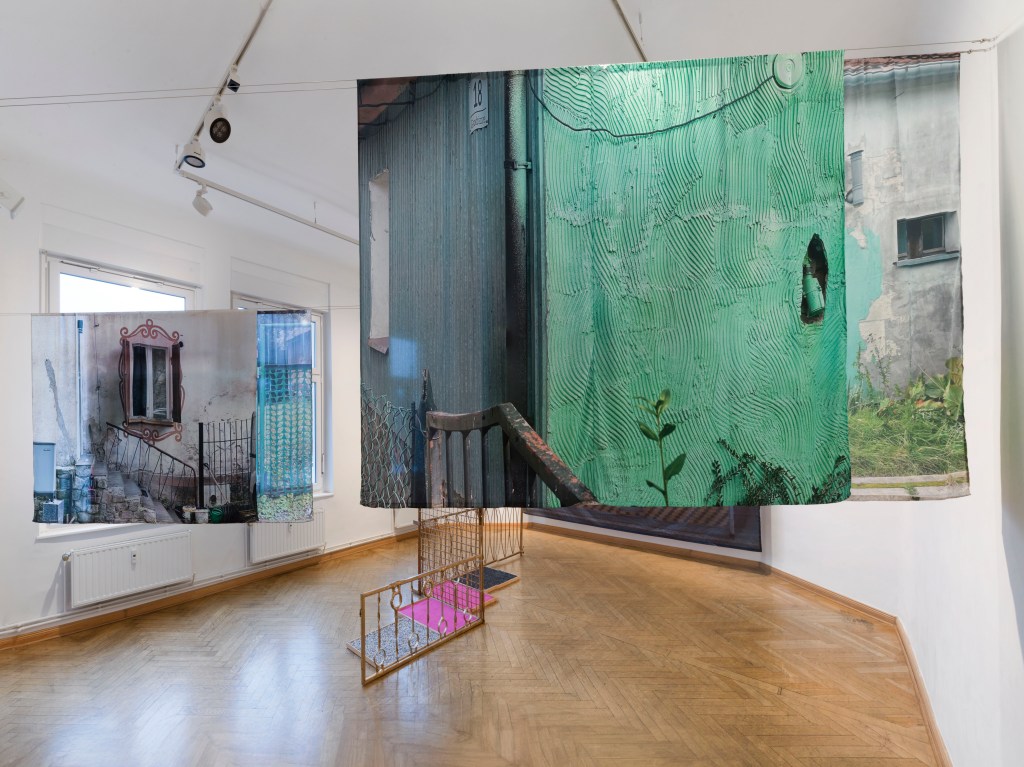
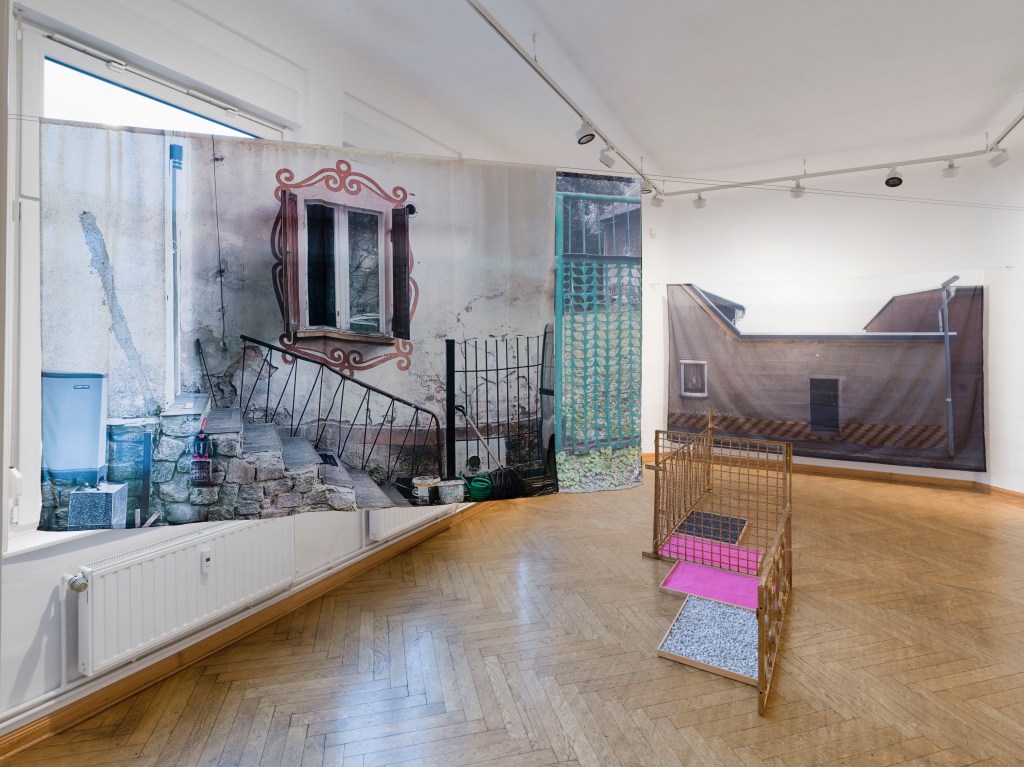
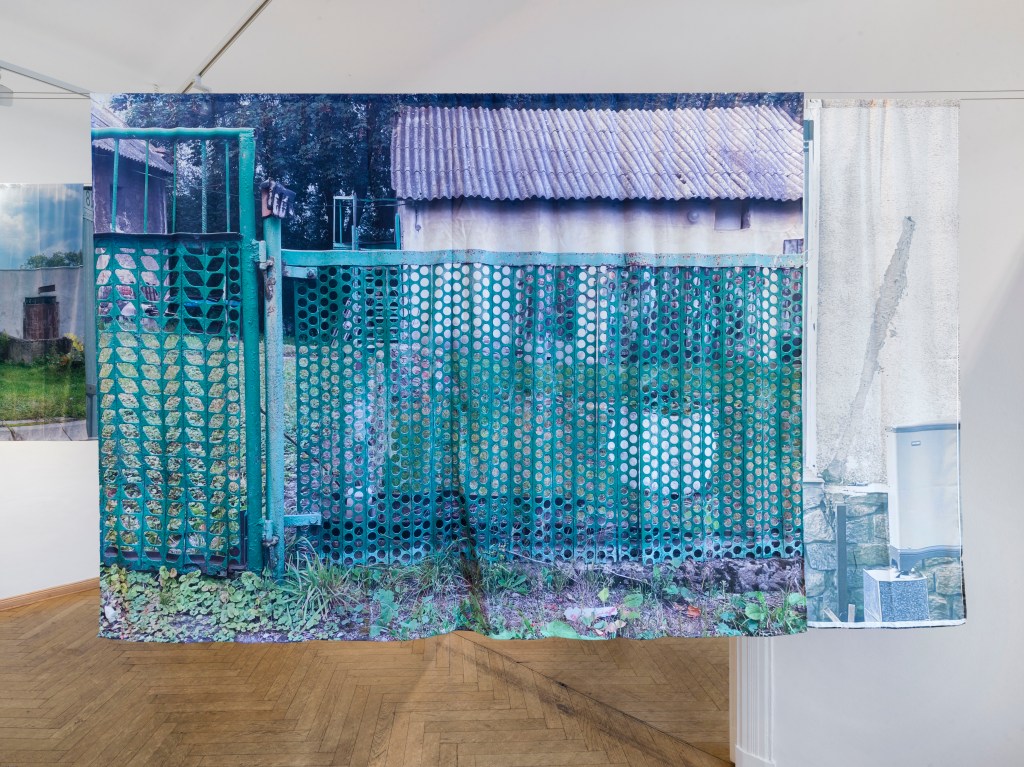
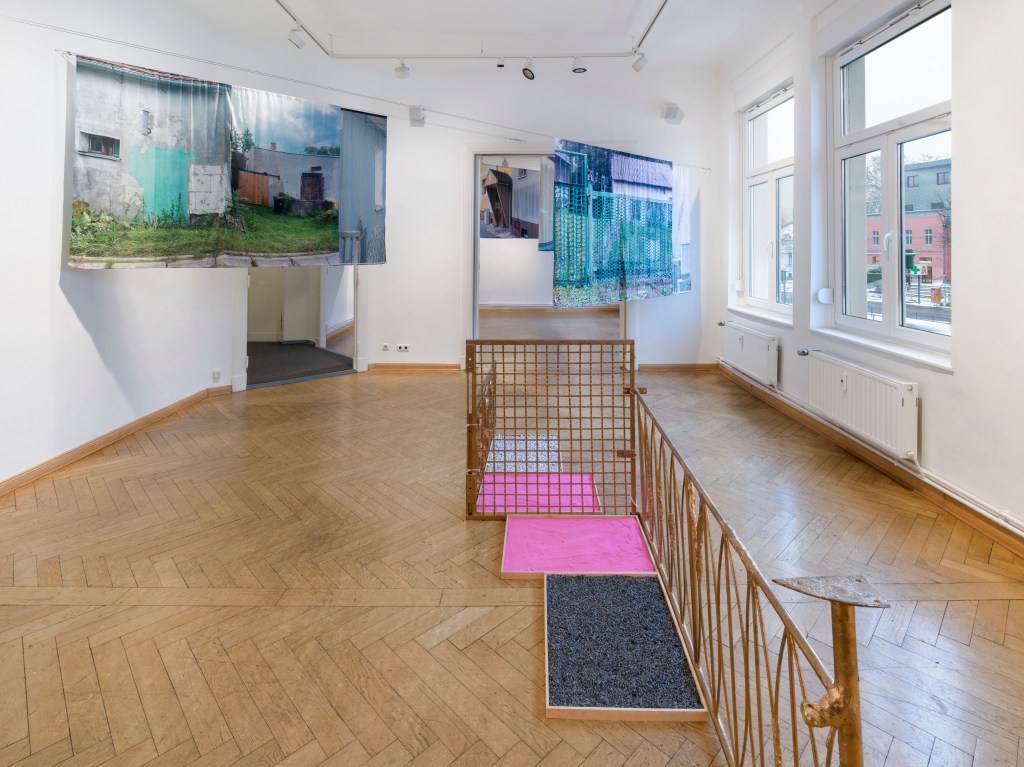
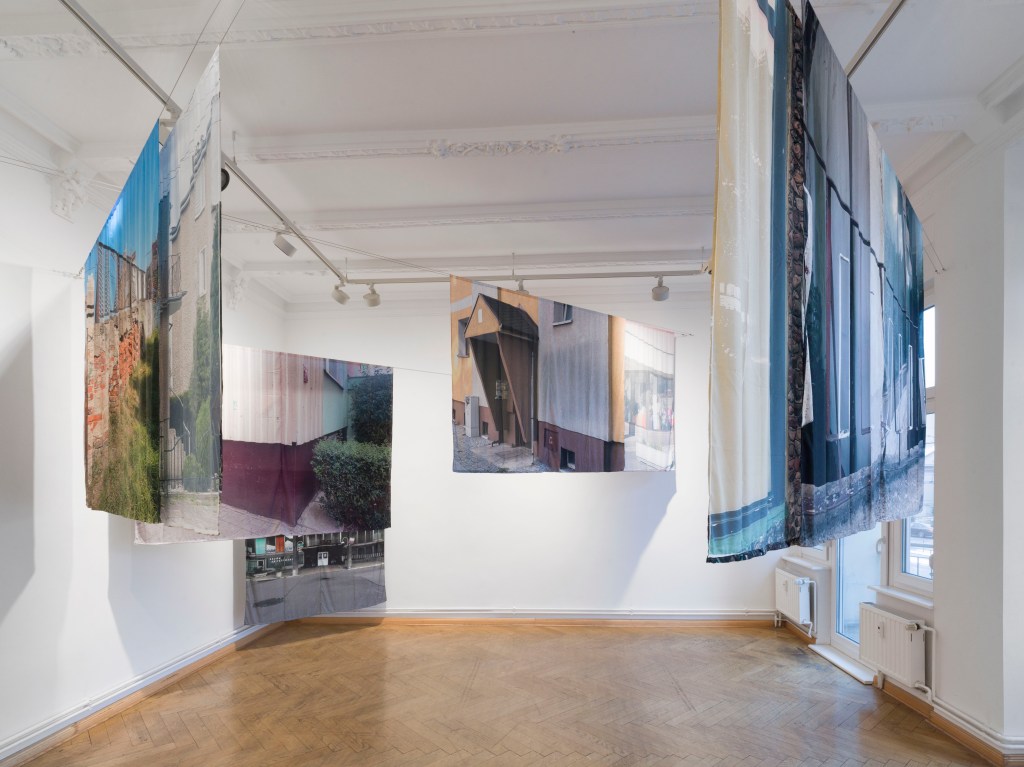
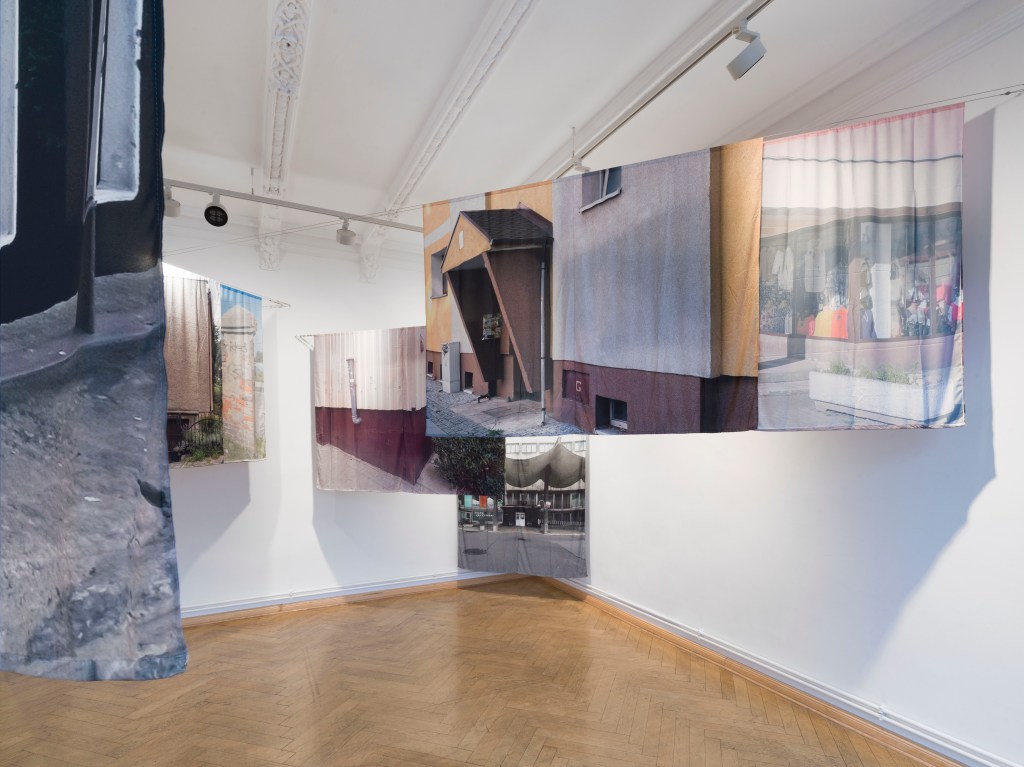
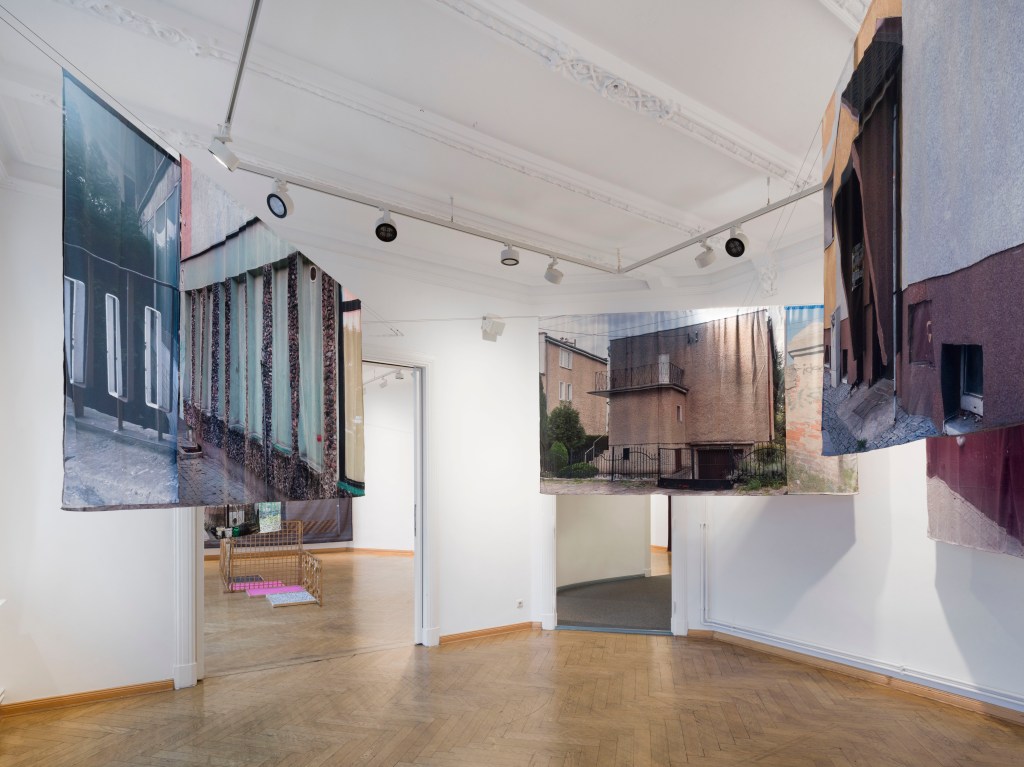
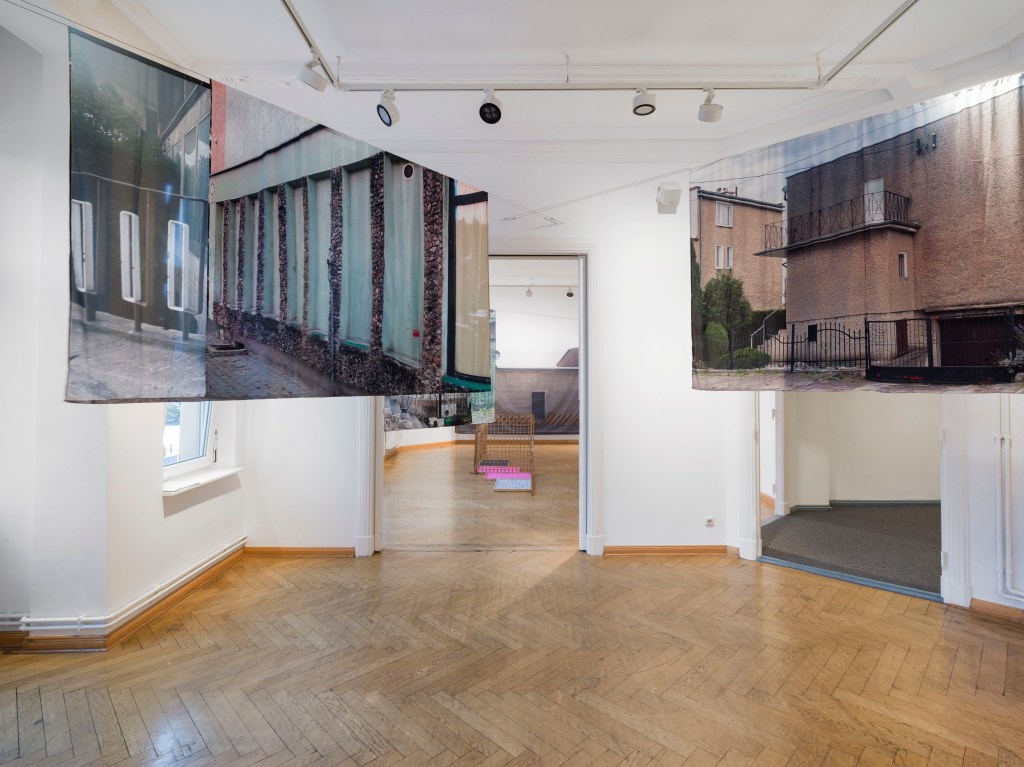
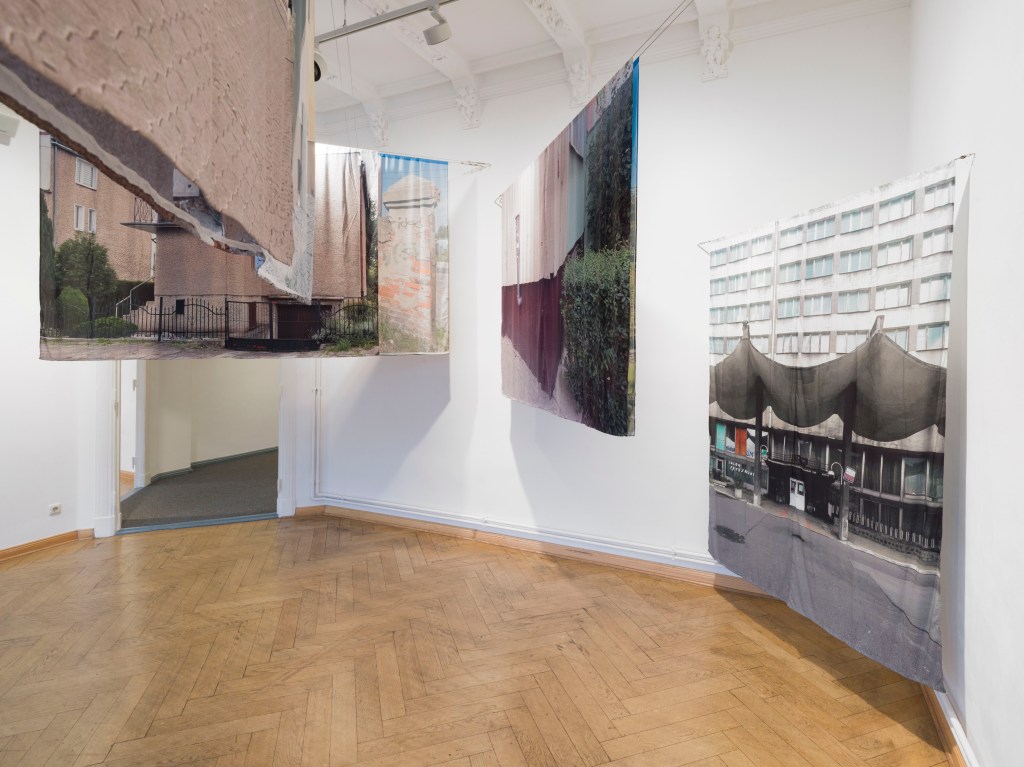
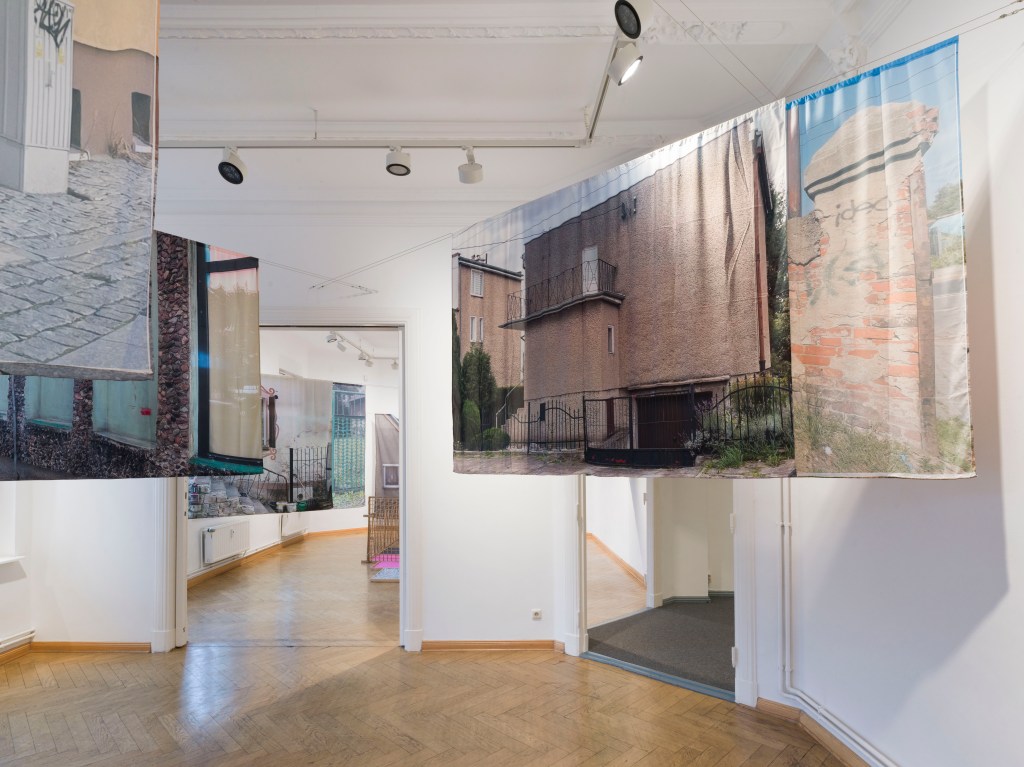
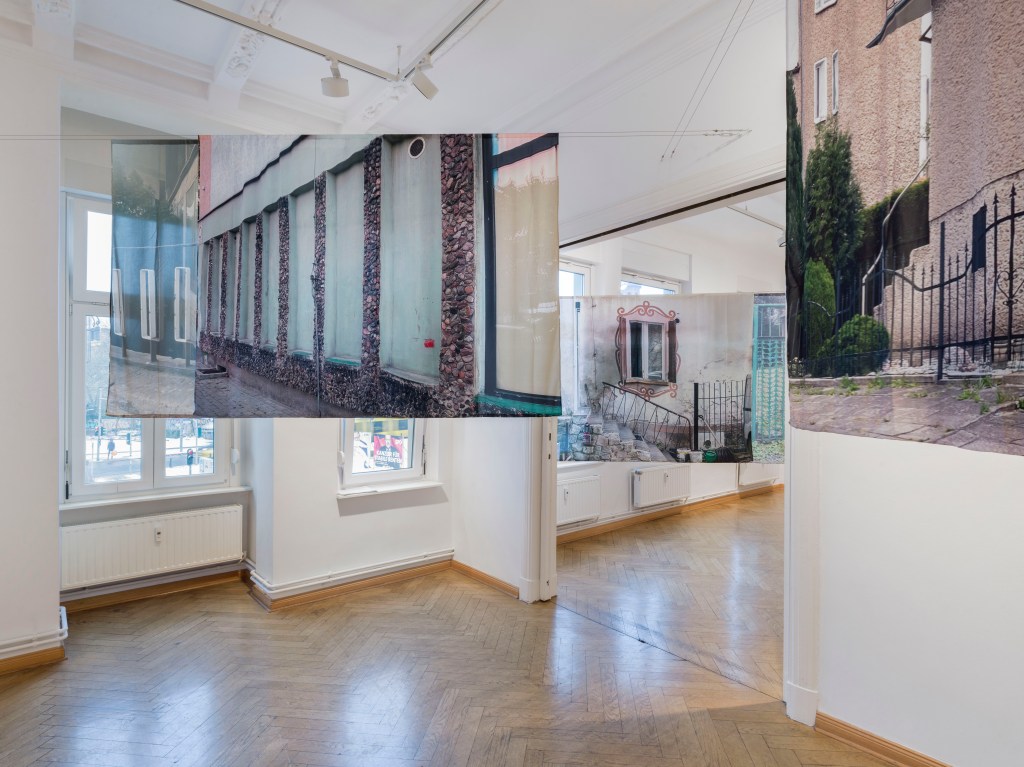
In meiner Ausstellung „Geschichte findet statt.“ in der Galerie Pankow ist das zentrale Thema das Verhältnis von Geschichte von städtischem und ländlichem Raum. Begreift man „Geschichte findet statt.“ als Formel, ergeben sich Fragen wie: Wie kommt die Geschichte zum Raum? Wie besetzt Geschichte Räume und wie wird das Besetzen von Räumen zum Ziel von Geschichte. Zu unserem Wissen von Geschichte gehören auch Orte. Orte haben Namen und Geschichte, sie schließen Vergangenheit ein.2023 hatte ich die Gelegenheit, mich während eines Stipendienaufenthaltes in dem polnischen Dorf Krzyzowa, ehemals Kreisau, intensiv mit der Geschichte der Widerstandsgruppe „Kreisauer Kreis“ gegen den Nationalsozialismus und den Spuren der sich überlagernden Gesellschaftsordnungen und Zeiten auch in der näheren Umgebung zu beschäftigen. Meine Beobachtungen im jetzigen Krzyzowa und Umgebung bilden das Ausgangsmaterial – zum einen für die raumgreifende Installation, zum anderen für meinen gleichnamigen Fotofilm. Bekannt wurde Kreisau vor allem durch die Familie von Moltke und die Widerstandsgruppe Kreisauer Kreis. Helmuth James von Moltke war einer der führenden Köpfe der Widerstandsgruppe Kreisauer Kreis. 1942 und 1943 fanden im Berghaus, das als Wohnhaus der Familie zum Gutshof gehörte, drei geheime Treffen dieser Gruppe statt. Hier wurde eine mögliche Nachkriegsordnung ohne Adolf Hitler diskutiert. … Mich hatte während meiner täglichen 10 bis 15 Kilometer langen Spaziergänge fasziniert, wie sich die im ländlichen und städtischem Raum sichtbaren Überlagerungen unterschiedlicher gesellschaftlicher Zustände im Sinne von Geschichtsspeichern, eines Palimpsests, offenbaren und zugleich in private Gestaltungen einfließen. Und das in architektonischen, nahezu nebensächlichen, oft privat gestalteten Details. Der Begriff Palimpsest gilt als eine Metapher für die Überlagerungen von Bedeutungen und Sinnstrukturen, die durch Einflüsse und neue Bedeutungen nahezu unsichtbar werden. In der Architektur wird Palimpsest als eine Art Geistererscheinung verstanden, als eine Spur von etwas, was so nicht mehr da ist. … Man kann Palimpseste in der Architektur nicht nur als physische Spuren von ehemaligen Bauten verstehen, sondern auch als komplexe Überlagerungen von Bedeutungen. Es gibt dann nicht nur eine Schrift unter einer neueren Schrift, sondern mehrere aufeinanderliegende Schichten. Die konzeptuelle Überlagerung von Bedeutungen ist durch jene physischen Spuren erkennbar. …
History is taking place. In my exhibition “History is happening” at Galerie Pankow, the key issue is the relations between history and urban and rural space. Understanding “History is happening” as a set formula, the following questions arise: How does history arrive at space? How does history occupy spaces, and how does this occupation of spaces become one of history’s goals? Our knowledge of history also includes places. Places have names and histories; they incorporate the past. … In 2023 I had an opportunity to study the history of Kreisau’s resistance group, as well as traces of overlapping social orders and eras in the surrounding area. My observations in what is now Krzyżowa and the local area provide the source material – on the one hand for my space-consuming installation in the Pankow Gallery, and on the other for the photo-film of the same name. Helmuth James von Moltke was one of the leading figures in the resistance group Kreisauer Kreis. In 1942 and 1943, this group met three times secretly in the Berghaus, which was his family home on the estate. The discussion covered a possible post-war order without Adolf Hitler. Helmuth James von Moltke was a lawyer who had gathered a group of opponents of National Socialism around him, working together to develop plans for a democratic and constitutional Germany after the dictatorship had come to an end. … On my daily 10-to-15-kilometre walks, I was fascinated by how the visible overlapping of different social conditions in rural and urban areas is revealed in the sense of historical memories – a palimpsest – and also how it flows into private designs. This is often manifest in architectural, almost incidental, often individually planned details. The term palimpsest is a metaphor for the superimposition of meanings and structures of meaning that have become almost invisible due to new influences and new meanings. In architecture, a palimpsest is understood as a kind of ghostly apparition, as a trace of something that is no longer there. Palimpsests in architecture can be grasped not only as physical traces of former buildings, but also as complex superimpositions of meaning. Then, there is not just one script underneath a more recent script, but several superimposed layers. The conceptual overlapping of meanings is discernible through such physical traces. …
 Andrea Pichl