2025/2026, pencil on paper, each 21 x 29,7cm in „deutsch deutsch“, Kunsthalle Vogelmann, 2026, Heilbronn
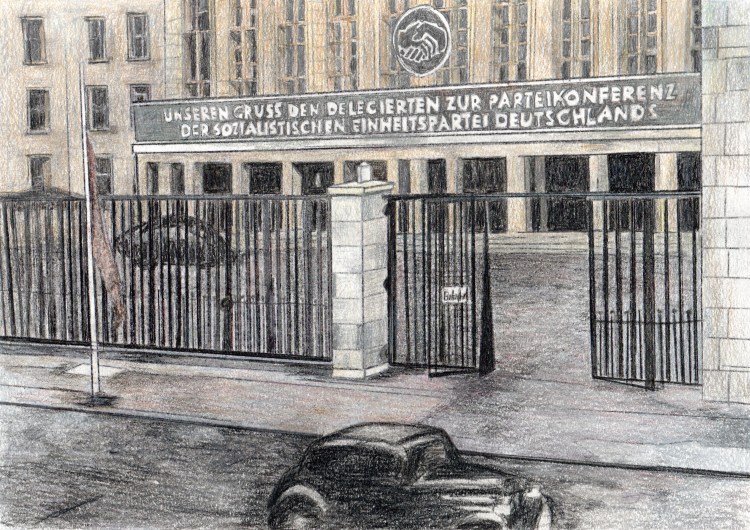
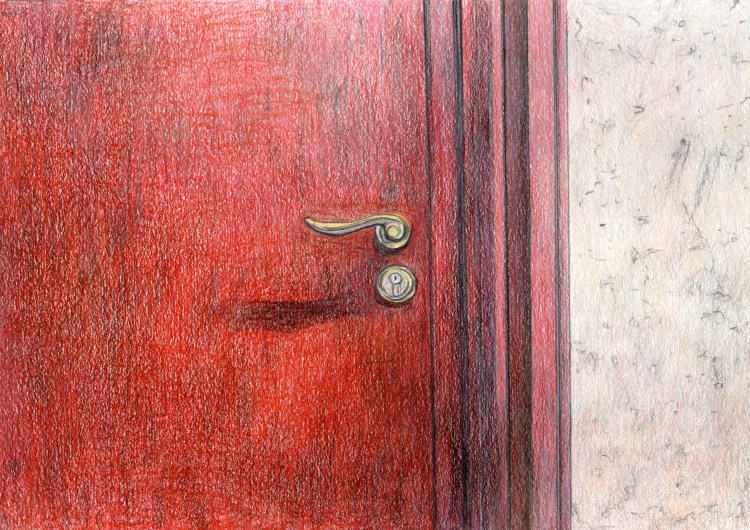
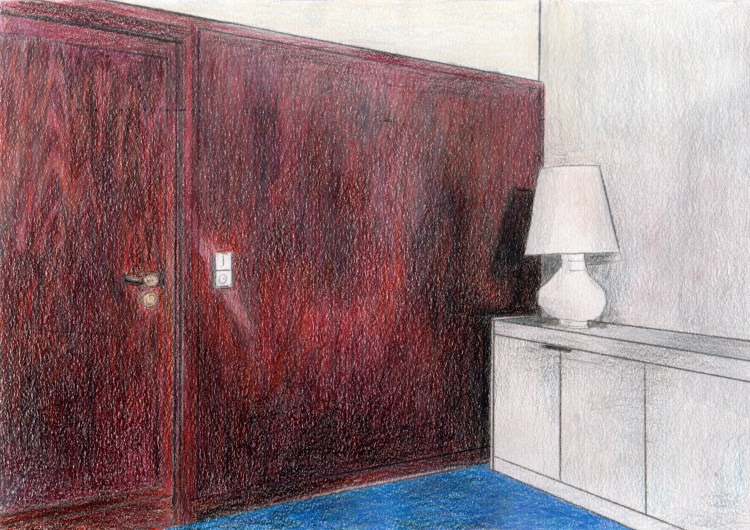
Die Zeichnungen des Finanzministerium historisch verhandeln die vielschichtige Historie des Reichsluftfahrtministeriums in Berlin – ein Gebäude, das wie kaum ein anderes die Brüche und Kontinuitäten des 20. Jahrhunderts widerspiegelt. Der gigantische Gebäudekomplex wurde 1935/36 unter Hermann Göring im Stil einer sachlich-funktionalen Pseudoklassik errichtet und spielte eine zentrale Rolle beim Aufbau der Luftwaffe. Auch wurde hier die Wannseekonferenz geplant, die zur systematischen Ermordung der europäischen Juden führte. Wenige Jahre nach Kriegsende wandelte er sich zum politischen Machtzentrum der DDR, 1990 diente er als Sitz der Treuhandanstalt und heute beherbergt das Gebäude das Bundesministerium der Finanzen.
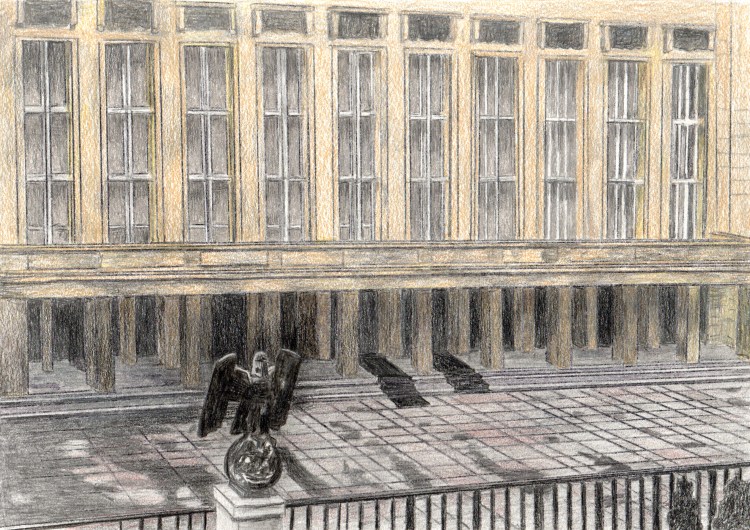
Die sechs kleinformatigen, nach historischen Fotos gefertigten Buntstiftzeichnungen setzen diesen Prozess der politischen und funktionalen Aneignung ins Bild. Der mit Reichsadler und Hakenkreuz versehene „Ehrenhof“ verrät nur wenig über die tatsächlichen Dimensionen des
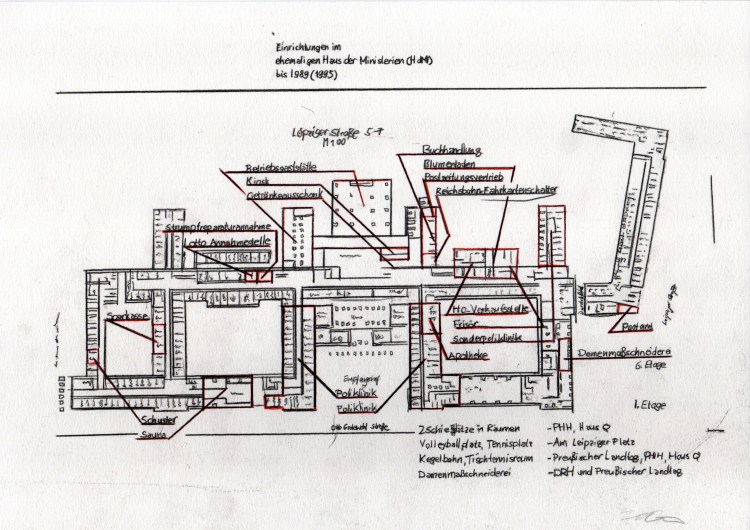
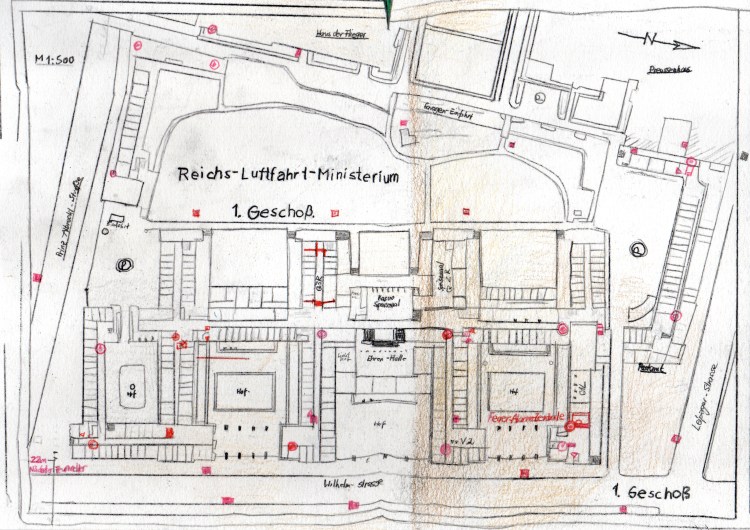
monumentalen Stahlbetonbaus mit 2.000 Büroräumen und einer Nutzfläche von etwa 56.000 Quadratmetern. Auch ein schlichter laienhaft ausgeführter Grundrissplan relativiert und unterläuft diese schiere Größe, die ursprünglich den Machtanspruch des NS-Regimes unterstrich. Ein weiterer Grundriss verdeutlicht die umfangreiche Infrastruktur, die
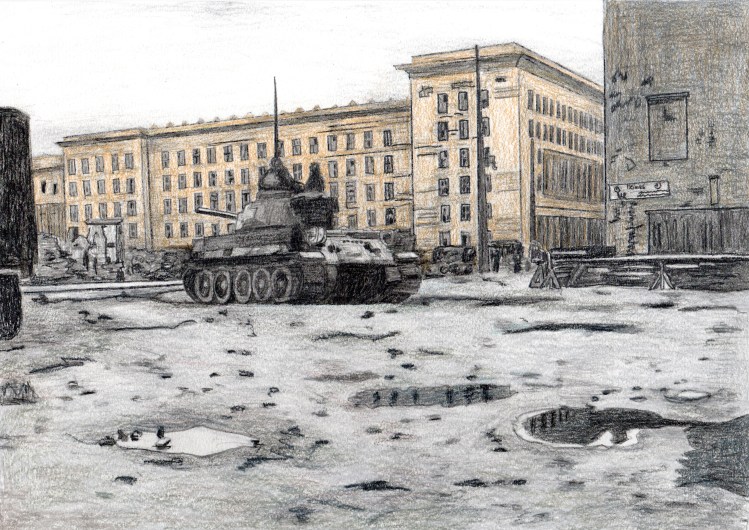
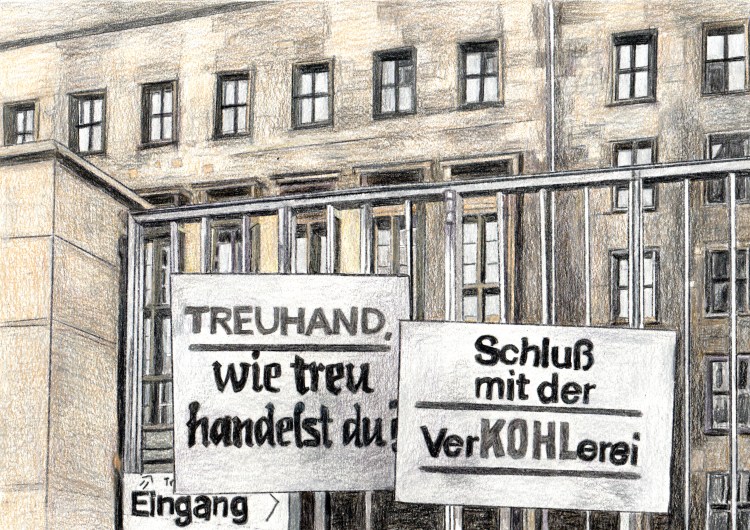
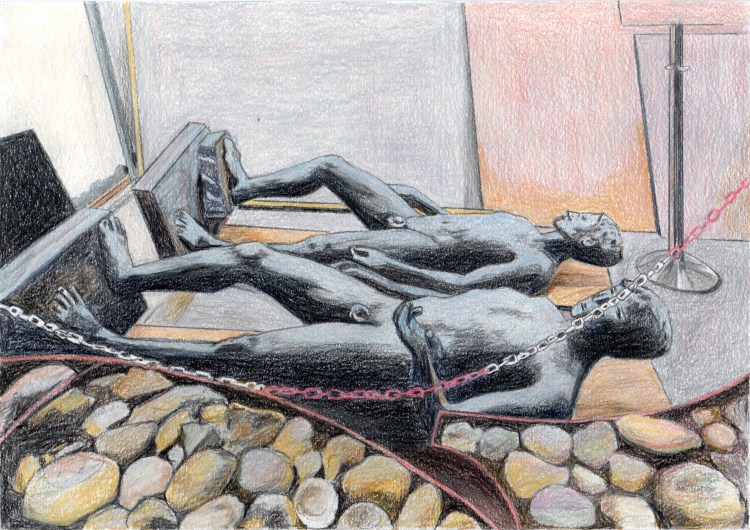
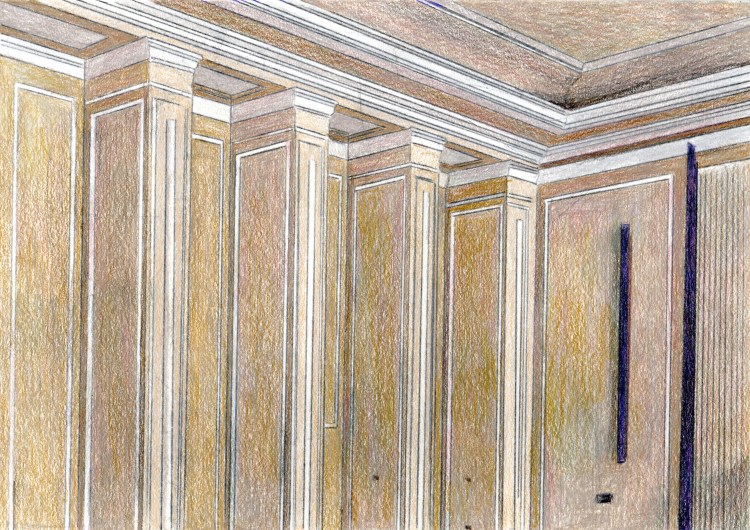
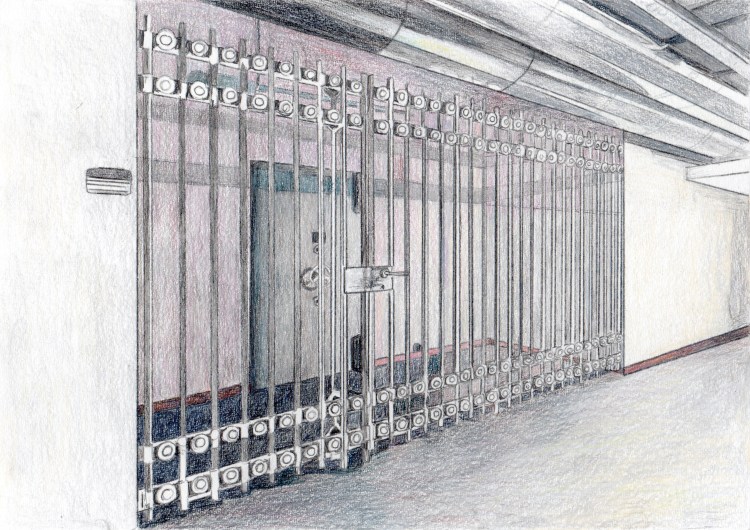
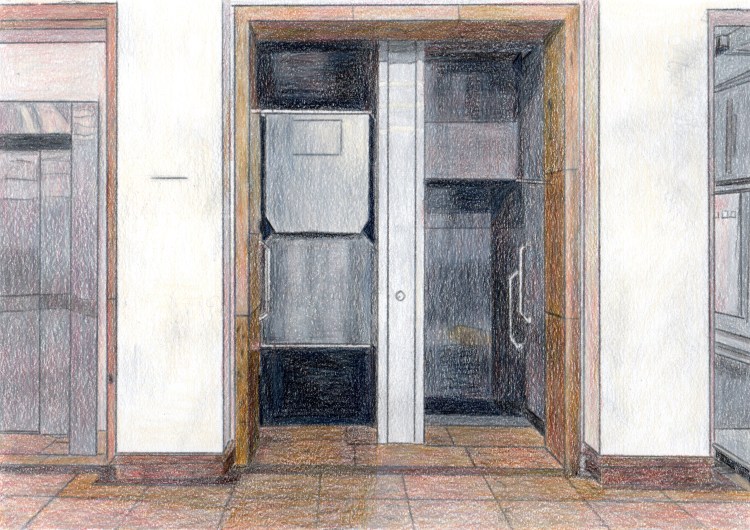
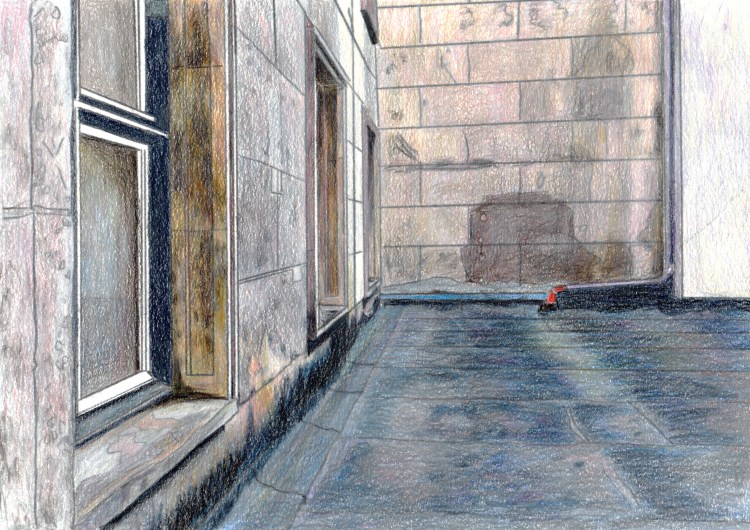
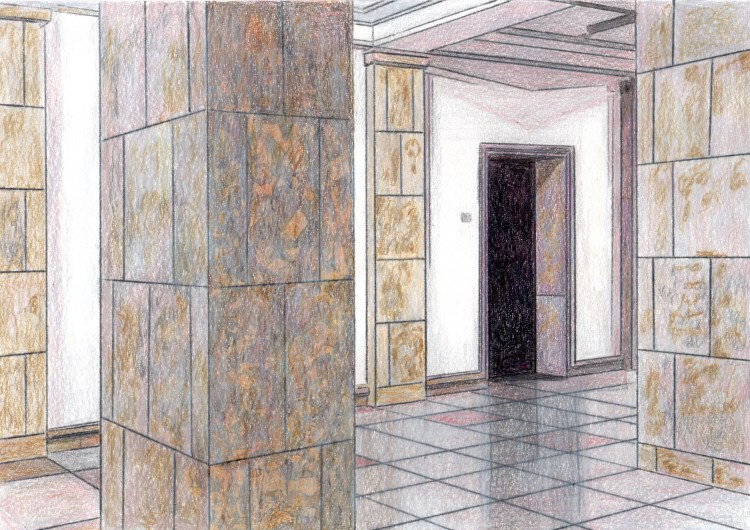
den nahezu 6.000 Regierungsmitarbeitern seit 1949 im „Haus der Ministerien“ zur Verfügung stand. Historische Schlüsselbilder – die gewaltsame Niederschlagung des Volksaufstandes 1953 sowie die massiven Proteste gegen die Privatisierung und Abwicklung der VEB-Betriebe der DDR durch die Treuhandanstalt – erweitern die Bildfolge um wesentliche zeithistorische Momente. Trotz dieser tiefgreifenden politischen Zäsuren und fundamentalen Systemwechsel blieb die Architektur weitgehend unverändert. Anpassungen erfolgten vor allem auf der Ebene der Ausstattung und symbolischen Codierung. Hier setzt die zweite Werkgruppe Finanzministerium an, die sich dem heutigen Zustand der sanierten Innenräume widmet. Der präzise Blick der Künstlerin setzt sich an ausschnitthaften Details fest, zeigt die Wandgliederung des „NS-Festsaals“, wo sich 1949 die DDR gründete, das nach Görings
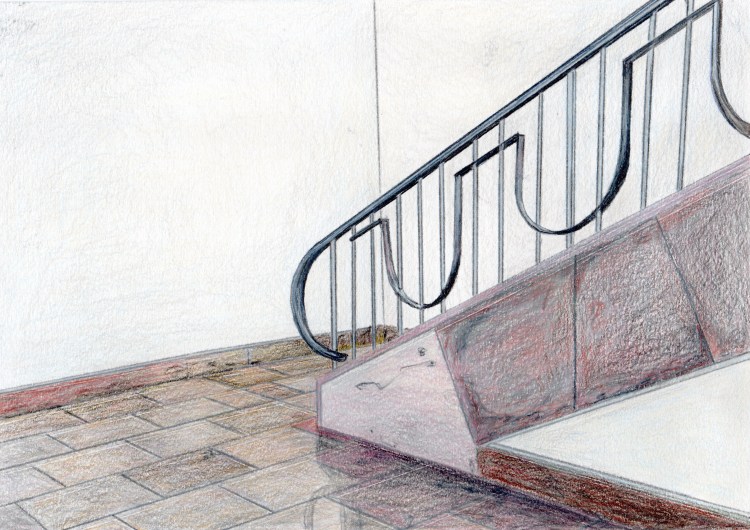
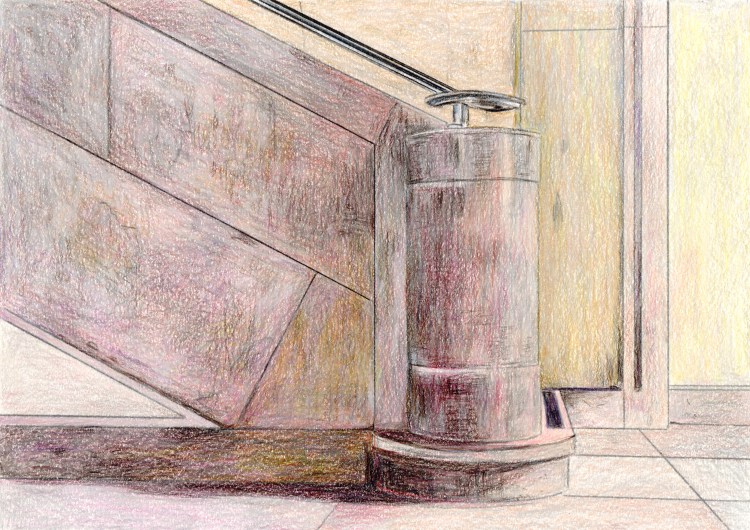
Wünschen aus Aluminium bestehende Treppengeländer – ein Schlüsselmaterial aus dem Flugzeugbau, den Paternoster aus DDR-Zeiten oder den Eingang zu Tresor- bzw. Schutzräumen im Kellerbereich, wo heute noch bronzene NS-Figurinen lagern. Rita Täuber
The reconstruction of a Nazi temporary shelter creates the framing here for a total of 19 drawings from three different work series: Ministry of Finance (historial), Ministry of
Finance and Wandlitz. The drawings for Ministry of Finance (historical) examine the multifaceted history of the Reich Aviation Ministry in Berlin – a building that,in almost unparalleled fashion, reflects the ruptures and continuities of the 20th century.
The gigantic complex was built in 1935–6 at Hermann Göring’s instruction in a matterof-fact, functional style and played a central role in the establishment of the Luftwaffe. It was also where the Wannsee Conference was planned, which led to the systematic murder of European Jewry. Only a few years after the end of the war, it was transformed into East Germany’s political powerhouse; in 1990 it served as the head office of the Treuhandanstalt, and it is now home to the German Federal Ministry of Finance. The six small-format colored pencil drawings based on historical photos present this process of political-functional appropriation. The “Courtyard of Honor,” decorated with the Reich Eagle and the swastika, reveals little about the real scale of the monumental, reinforcedconcrete building with its 2,000 offices and a gross floor area of some 56,000 square meters. A plain, amateurishly produced ground plan also relativizes and undermines this sheer size, which originally served to underscore the Nazi regime’s claim to power. Another ground plan illustrates the extensive infrastructure that was put in place to serve the almost 6,000 government staff members in the “House of Ministries” from 1949 onwards: a polyclinic, an apothecary, a flower shop, a hairdresser, and sports and leisure facilities. These all highlight the largely self-contained bubble in which employees moved, with a structure clearly centered on privileges. Key historical images – the violent manner in which the People’s Uprising of 1953 was crushed, the massive protests against the privatization and sellout of East Germany’s nationalized industrial corporations by the Treuhandanstalt – all expand the sequence of images to include key moments in recent history. The architecture remained largely unchanged despite these profound political breaks and the fundamental switch in political system. Adaptations were undertaken primarily at the level of fit-out and symbolic coding. This is the starting point of the second group of works, Ministry of Finance, which is devoted to the current state of the refurbished interior. The artist’s precise eye is caught by details that resemble cropped sections, and she outlines the structure of the walls of the “Nazi Festival Hall,” where East Germany was officially founded in 1949, the stair banisters which, in keeping with Göring’s wishes, were made from aluminum (a key material in airplane construction), the paternoster dating from the days of East Germany, and the entrance to the strongroom and shelters in the basement, where today bronze Nazi figurines still lie in storage. Rita Täuber

